
I started watching A Different World expecting a typical college drama. However, by the end of the first episode, I was much more invested than I anticipated. In fact, I finished the entire first season in one day. With 10 episodes (airing now on Netflix), each running approximately 40 minutes, the series was an easy binge-watch. More importantly, it left me with plenty to reflect on as an HBCU student myself.
The sequel series follows Deborah Wayne, played by Maleah Joi Moon, the free-spirited and rebellious youngest daughter of original legacy characters Dwayne Wayne (Kadeem Hardison) and Whitley Gilbert (Jasmine Guy), as she begins her freshman year at Hillman College. The series also introduces the children of other characters from the original 1987 sitcom, creating a new generation of Hillman students while maintaining a connection to the show’s legacy.
One of the things I appreciate most about this series is how closely it reflects the realities of attending an HBCU. Rather than focusing solely on the typical college experience, the show explores the deeper challenges students face while navigating young adulthood. Financial struggles, heartbreak, relationships, family conflicts, and academic pressure are all woven into the storyline. These are not isolated experiences. They are realities many college students must learn to balance daily while trying to figure out who they are and who they want to become.

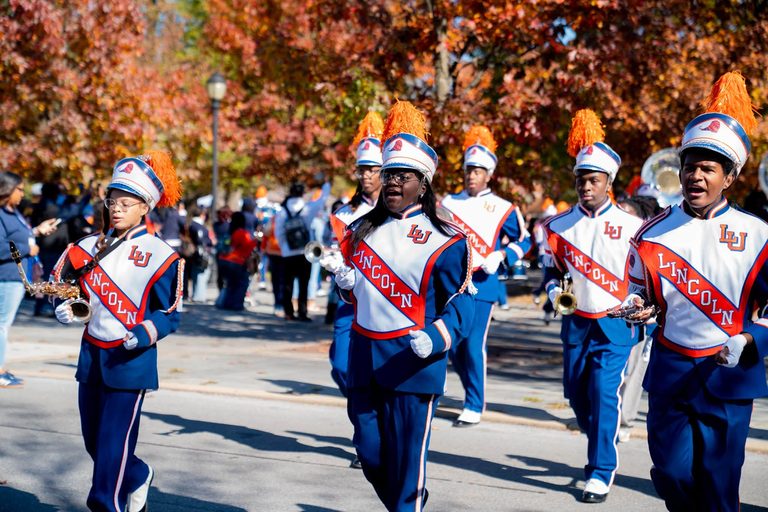
Another aspect that stood out to me was the show’s incorporation of real-life HBCU traditions and events. Instead of simply highlighting the excitement and celebration surrounding these experiences, the series also explores the preparation, challenges and processes that lead up to them. This adds another layer of authenticity, allowing viewers to see more than just the finished product. It highlights the community, effort and personal growth that are often part of the HBCU experience.
I also found Deborah to be an interesting protagonist because the show does not attempt to make her completely likable. Some of her decisions frustrated me, but that ultimately made her feel more realistic. She is not a perfect college student, and she does not always make the right choices. Instead, she is still learning how to navigate her emotions, relationships and responsibilities while trying to establish her own identity.
If I had to choose one character I relate to most, it would undoubtedly be Deborah. She genuinely tries to be selfless but sometimes becomes so consumed by her own goals and personal struggles that she unintentionally makes situations worse. Despite this, her intentions are usually good, and I admire her determination to prove others wrong and make her parents proud. I especially relate to how in tune she is with her emotions. She feels things deeply, and those feelings often influence how she responds to the people and situations around her. She tries to be a good and supportive friend, even when she is working through challenges of her own.

Despite its strengths, I do think the series could have benefited from a slower pace. Covering what appears to be an entire academic year in just 10 episodes left certain storylines feeling rushed. Some characters and relationships deserved more time to develop, and viewers could have benefited from seeing more of the buildup behind significant moments. With additional episodes, the series could have explored its characters’ personalities, motivations, and relationships in greater depth. Hopefully, the writers will take this into consideration when developing a second season.
Even with these shortcomings, I would absolutely watch another season, and I am excited to see how the reboot continues to evolve. Sequels have the challenge of honoring an established legacy while creating something meaningful for a new generation. This series has the potential to do both. It carries the spirit of the original show while introducing new stories that reflect the experiences of today’s college students.
More than anything, I am excited to see a show that places HBCU life at the center of its story. HBCUs are more than homecoming celebrations, step shows and campus traditions. They are communities where students experience personal growth, navigate difficult circumstances, build lifelong relationships, and discover who they are beyond the classroom. Those experiences deserve to be represented on a larger platform.

I believe A Different World has the potential to become an important part of that representation. It may be too early to determine the full impact of this series, but I am excited and honored to witness its development in real time. HBCU appreciation and the everyday experiences of HBCU students deserve more mainstream attention, and this series is a promising step toward bringing those stories to a wider audience. If it continues to build on the foundation established in its first season, A Different World could help shape how a new generation understands and appreciates the HBCU experience.