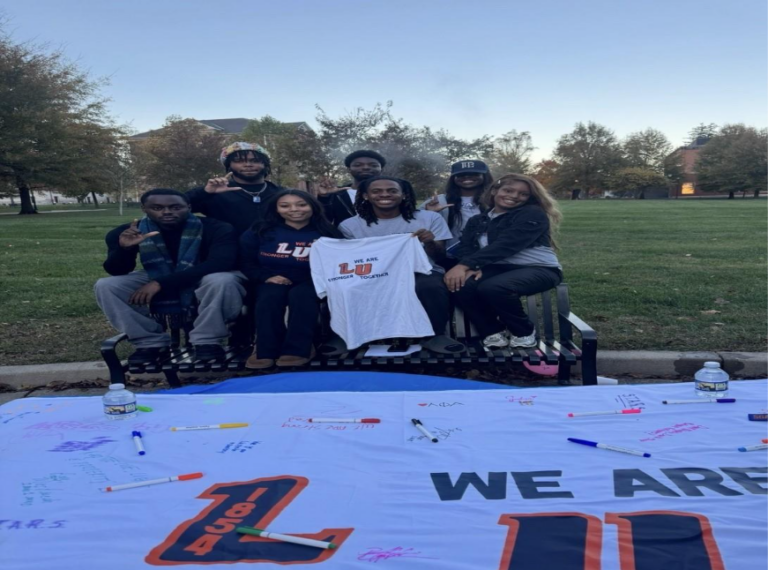
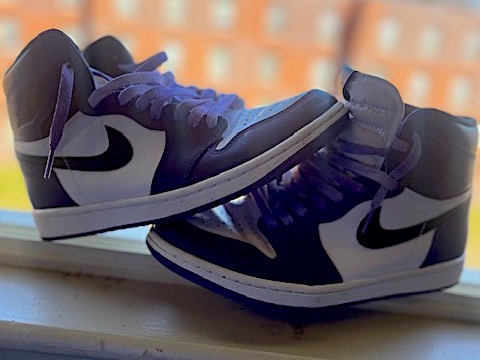
Students stepped onto Lincoln University’s campus dressed to make an impression. From carefully planned outfits to fresh haircuts and accessories, the first day of class became more than the start of a new semester. It was a chance for students to show off their personal style.
But does Lincoln have its own fashion culture?
For some students, the answer is yes. For others, fashion at Lincoln is less about following a specific campus style and more about wearing what feels right to them.
Cyniah, a fashion consultant for Ziana Fashion Club Inc., describes the campus fashion culture as active, especially during major events such as Homecoming, Spring Fling and Welcome Week.
“People like to dress up,” Cyniah said, explaining that students often use events as opportunities to express their style.
For Cyniah, attending an HBCU has allowed her to experiment with fashion. Coming from a charter school where uniforms were enforced, Lincoln gave her the opportunity to express herself in ways they couldn’t before.
Fashion has also become a way for student orgs to build community. Ziana Fashion Club Inc. hosts fashion-related classes, walking sessions, social events and clothing donation drives. Members also help other students with their fashion and preparation for modeling opportunities. Cyniah believes fashion goes beyond clothing because of the confidence it can create.
“How you look is definitely how you’re gonna feel in the day,” she said.
However, not every Lincoln student views the campus as having a specific fashion culture.
Carlos Jones, a community advisor, views Lincoln’s fashion as a collection of individual preferences rather than a unified style.
“I don’t really see it as a fashion culture,” Carlos said. “I see it more as people put on what they like and what they feel makes them comfortable.”

Although he doesn’t view Lincoln as having a defined fashion culture, appearance is still important to him. Carlos feels looking put together is important because clothing can influence how others perceive someone.
“How you look is one of the most important things ever,” Carlos emphasized, pointing to the importance of making a strong first impression.
These perspectives also raise the question of whether students dress for themselves, for others or for a combination of both. Carlos said he believes it can be both. Some students may dress casually because they are comfortable, while others use clothing to express how they are feeling.
The conversation surrounding HBCU fashion extends beyond Lincoln. Some historically Black colleges and universities have implemented formal policies regarding student appearance.
Tuskegee University, for example, introduced a dress policy for the 2026 fall semester that placed restrictions on certain clothing and head coverings, including bonnets and durags. The policy sparked debate over the balance between professional presentation, personal expression and cultural identity.
ABC News reported that university officials emphasized the importance of students making strong first impressions, while students and others questioned whether certain restrictions unfairly targeted forms of Black cultural expression.
Other HBCUs have also established dress expectations. HBCU Connect reported on policies at institutions including Hampton University, Howard University and Florida A&M, showing that expectations around student appearance can vary from one HBCU to another.
The conversations at these universities provide a larger context for understanding fashion at Lincoln. While some HBCUs have formal policies, Lincoln’s expectations around appearance are more informal.
According to Carlos, Lincoln doesn’t have a specific dress expectation, but he did notice an expectation that students should present themselves well.
“I do think we have a movement where we should keep ourselves classy and represent ourselves as young Black women and Black men,” he said.
For Lincoln students, fashion does not appear to have one definition. It can be a source of confidence, a way to express personality, a form of comfort or simply part of making a good first impression.
Whether Lincoln has a certain fashion culture may depend on who is asked. But it’s clear that for many students, what they wear communicates something about how they see themselves and how they want to be seen.