
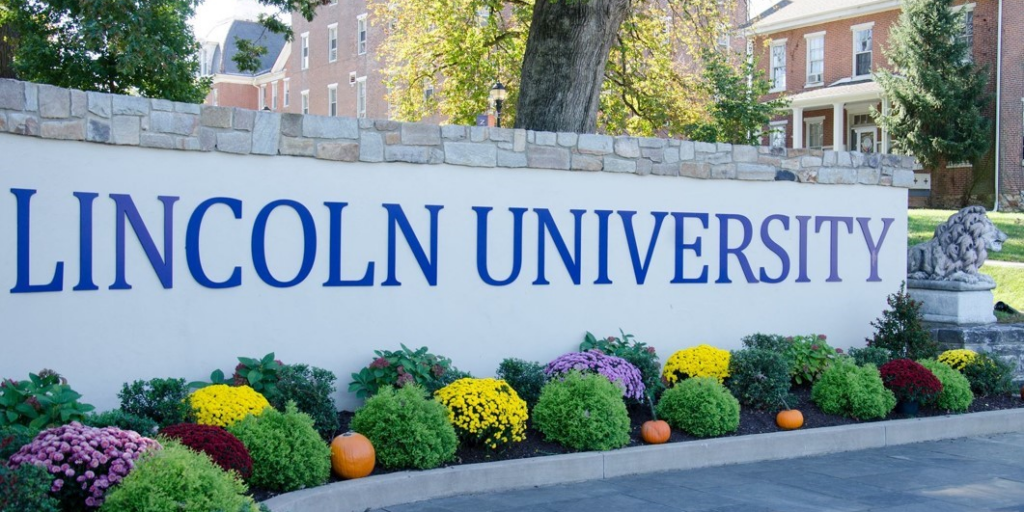
Image courtesy of Lincoln University
Written by: Robert Covington & Ashanti Williams
Lincoln University, PA — Lincoln University, founded in 1854 as the Ashmun Institute, stands today as the nation’s first degree-granting Historically Black College and University (HBCU) — a legacy rooted in liberation, leadership, and unyielding excellence.
For 170 years, Lincoln has been more than an academic institution. It has been a crucible of Black leadership, a sanctuary for intellectual ambition, and a beacon for students around the world. Originally chartered to educate African American men whose access to higher learning was severely limited, the university quickly became a national leader in producing future physicians, attorneys, educators, and change makers. During its first century alone, Lincoln graduated 20% of all Black physicians and more than 10% of Black attorneys in the United States, which was an astounding contribution to American professional life.
Lincoln’s influence reaches far beyond Pennsylvania. Its alumni include Harlem Renaissance icon Langston Hughes (Class of 1929) and Thurgood Marshall (Class of 1930), the first African American U.S. Supreme Court Justice — both figures whose work reshaped culture and justice nationwide. It has also formed global leadership. Those graduates include Nnamdi Azikiwe, the first president of Nigeria, and Kwame Nkrumah, the first president of Ghana.
The university’s campus has witnessed history. In 1921, President Warren G. Harding visited shortly after the Tulsa massacre, calling for healing and honoring African-American veterans of World War I. In 1946, Albert Einstein delivered lectures on physics and spoke on racism, reinforcing Lincoln’s enduring commitment to scholarship and social justice.
One of Lincoln’s proudest traditions, The Lincolnian, has documented the Black experience for a century. Founded in 1925, the student newspaper covered pivotal moments, including visits from Malcolm X, Martin Luther King Jr., and the Civil Rights Movement itself. Alumni reflect on The Lincolnian as an “irreplaceable thread in the tapestry of Lincoln’s history,” preserving voices often marginalized elsewhere.
Today, under the leadership of President Brenda A. Allen, a Lincoln alumna, who was recently named a Fulbright HBCU Leader for the sixth consecutive year. Also, celebrating alumni like Dr. William E. Bennett for induction into the National Black College Hall of Fame.
Yet Lincoln’s story isn’t only about triumph. Like many communities, it has faced challenges — including acts of violence that have tested its resilience. This fall, a shooting during homecoming festivities left one person dead and six injured, a stark reminder of the broader crises facing campuses and communities nationwide. The university responded with support services and community healing efforts.
As Lincoln University moves into its next century, its mission remains unchanged: to learn, liberate, and lead — a philosophy as vital in 2026 as it was in 1854.